
There are lots of great organic/regenerative/ecological events happening this October, and we are excited to share them here. We hope you have fun at an ag event online or near you this month!
This Organic Month, COG and our partners are working to make sure organic is part of that conversation, as a “shovel ready” tool for a more profitable, resilient, and competitive Canadian food system.
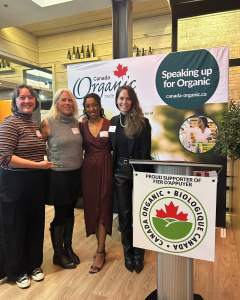
During Organic Month 2026 at the Canada Organic Trade Association’s (COTA) Organic Gala and Leadership Awards, COG’s Regenerative Organic Oats (ROO) program was honoured to receive the Justice, Equity, Diversity, and Inclusion (JEDI) Leader of the Year Award.
Biodiversity assessments can help farmers identify opportunities to improve habitat, support beneficial species, strengthen ecosystem functions, and better understand how their farming practices interact with the surrounding landscape.
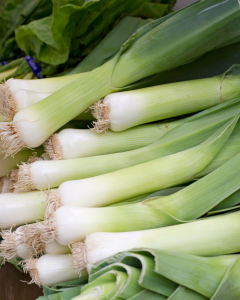
There are lots of great organic/regenerative/ecological events happening this September, and we are excited to share them here. We hope you have fun at an ag event online or near you this month!
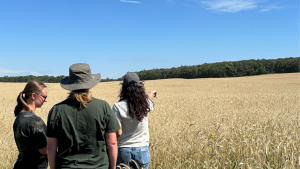
Canadian Organic Growers (COG) and our partners across the Prairies co-hosted field days in Saskatchewan and Manitoba this year as part of our Regenerative Organic Oats program (ROO).
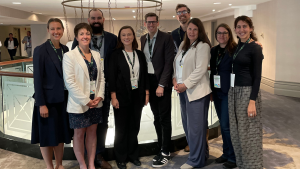
Canadian Organic Growers (COG) attended the Canadian Federation of Agriculture’s Summer Meeting and Policy Summit in Halifax this July.

Roller crimping is a strategy that some farmers participating in COG’s Regenerative Organic Oats (ROO) program are using to terminate cover crops while reducing tillage and preserving surface residue. Learn more in this ROO Farm Story!

To round out the revision of the Canadian Organic Standards, the Organic Federation of Canada (OFC) and Canadian Organic Growers (COG) have collaborated to update the Guide to the Canadian Organic Standards.

Canadian Organic Alliance calls for a dedicated Organic Food and Farming Strategy to help deliver the framework’s objectives.

Bill C-30 seeks to address economic uncertainty and food security by making the most substantive changes to pesticide regulation in a generation, yet this Bill was not studied by Parliament’s agriculture, health, or environment committees.

During National Indigenous History Month, we are reflecting on the rich agrarian histories and traditions of Indigenous peoples of Turtle Island, the ways in which colonialism caused deep harm to Indigenous food sovereignty and food systems, and the ways in which Indigenous peoples are cultivating their relationships with seed-saving and farming today.