
In regenerative organic systems, cover crops support diversity, reduce disturbance, and keep living roots in the soil for longer periods. But termination of cover crops is a big challenge within regenerative and reduced-tillage systems.
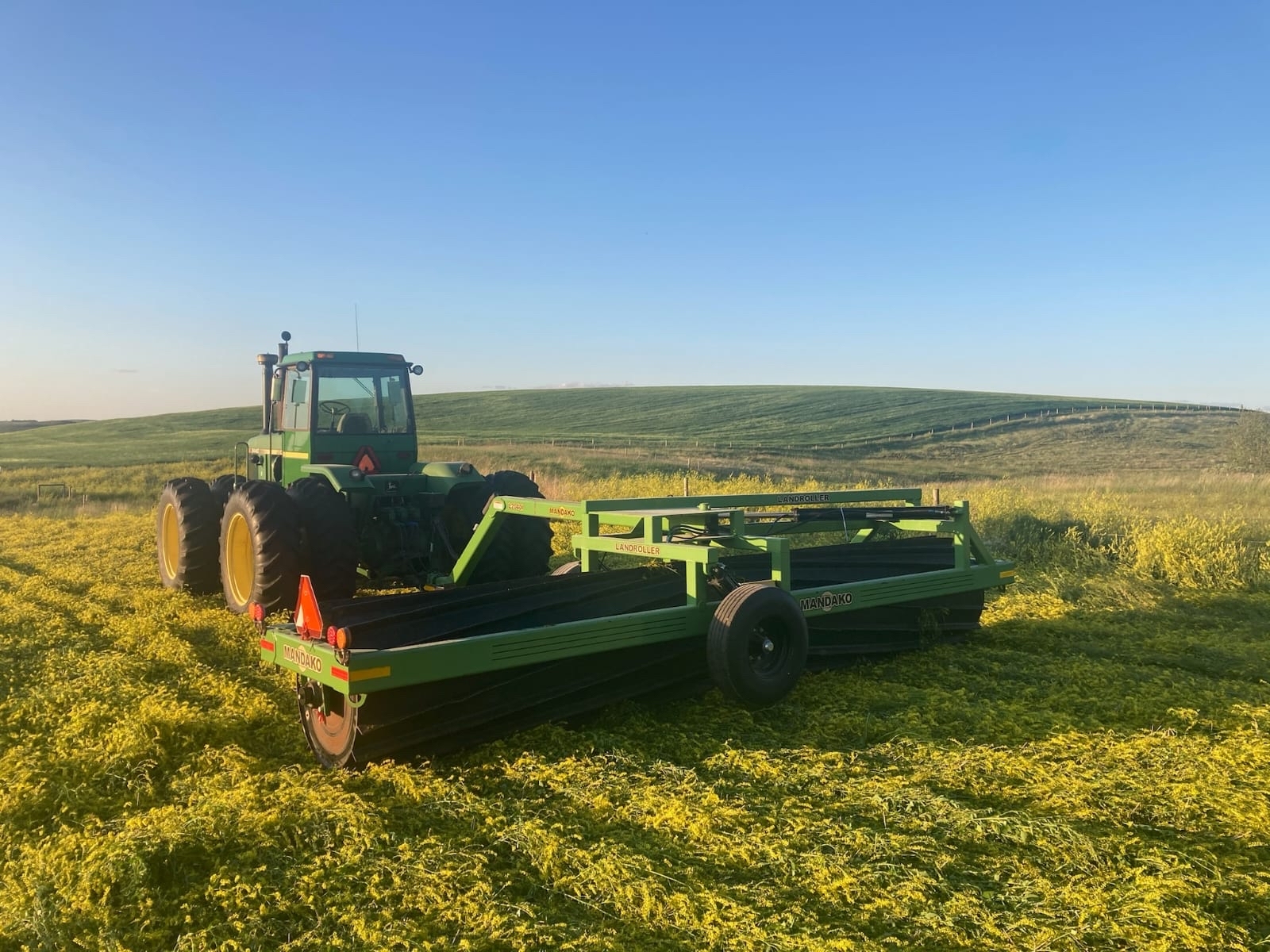
Roller crimping is a strategy that some farmers participating in COG’s Regenerative Organic Oats (ROO) program are using to terminate cover crops while reducing tillage and preserving surface residue.
On Pleasant Valley Ranch in Saskatchewan, Jason and his family are farming for the future: they believe in long term organic farming for sustainability, ecology and health.
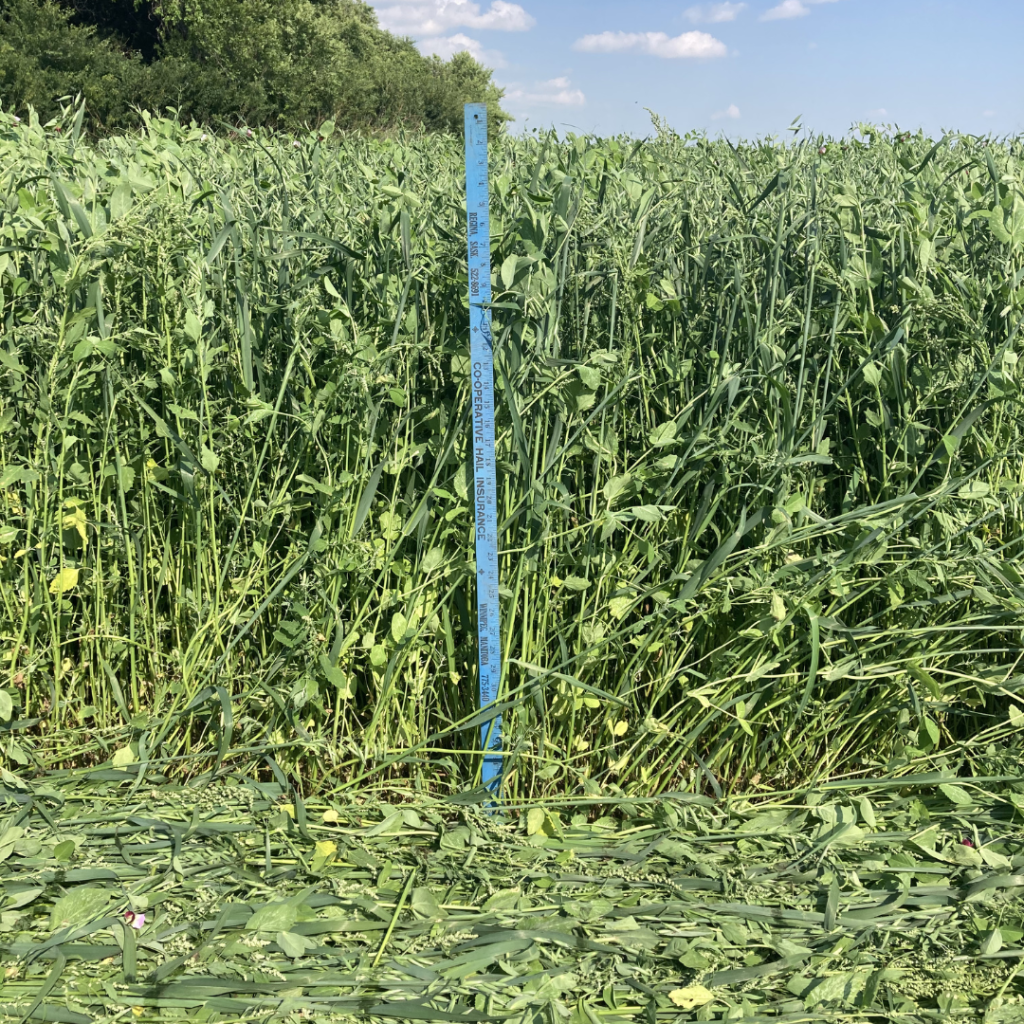
Jason recently used a cover crop pea–oat mix on transitional land that was heavily infested with Canada thistle. The hope was that this mix would create strong competition for the thistle, add nitrogen to the soil, and keep the soil covered.
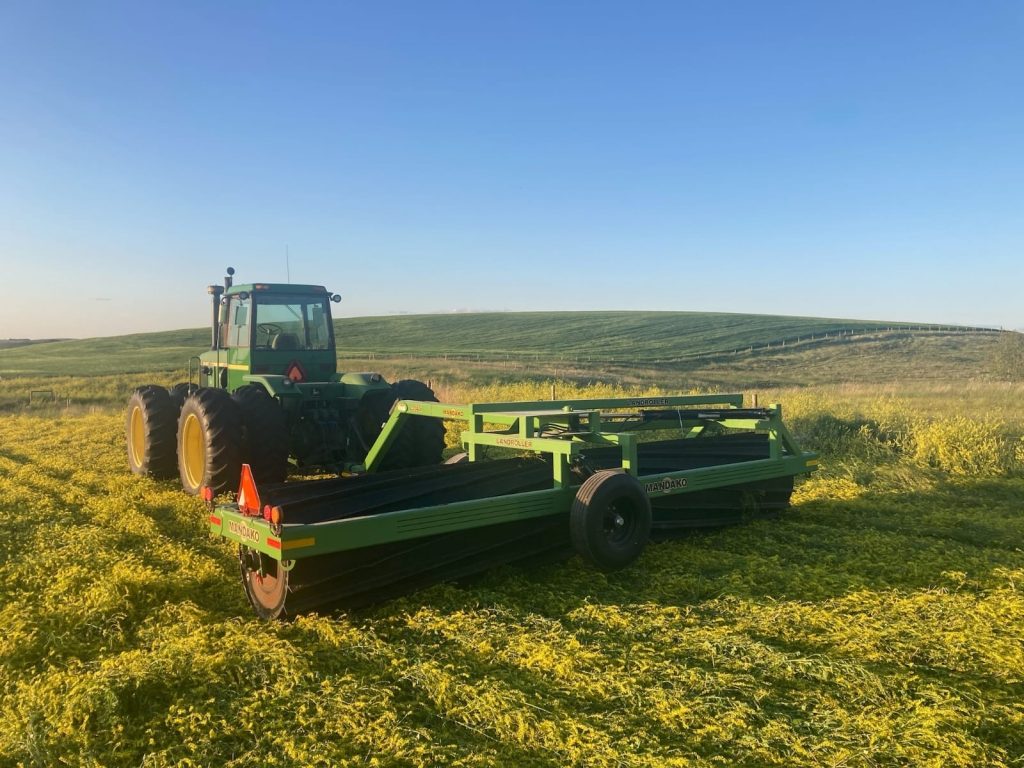
The mixture effectively started to suppress the thistle and when it was time to terminate, Jason used roller crimping.
After being terminated by the roller crimper, Jason’s pea-oat mix created a flat layer of organic matter. He believes it would have been even more successful at terminating the mix if he had done a second pass with the roller crimper.
Roller crimping is best done at flowering, when nutrients and energy are being directed towards the top part of the plant – when the root system is cut off from the top of the plant through crimping, it has less energy to reestablish itself.
The roller crimping process did pose some challenges on Jason’s land. Hilltops with thin soil were especially challenging, where low biomass limited crimping effectiveness. Like many tools in regenerative organic agriculture, the success of roller crimping will depend on the context of the specific farm, or even the specific field.
Despite the challenges, the combination of the cover crop mixture and roller crimping is working to suppress the thistle in Jason’s fields.
Considering cover crops for your farm and wondering how you might terminate them?
Check out the ROO Learning Series: Cover Crops resource on COG’s Regenerative Organic Hub for insights on cover crops, including specific tips for terminating with a roller crimper.
Want to read about how COG’s Regenerative Organic Oats (ROO) program works with Prairie-based growers like Jason? Visit our ROO program page to learn more.