
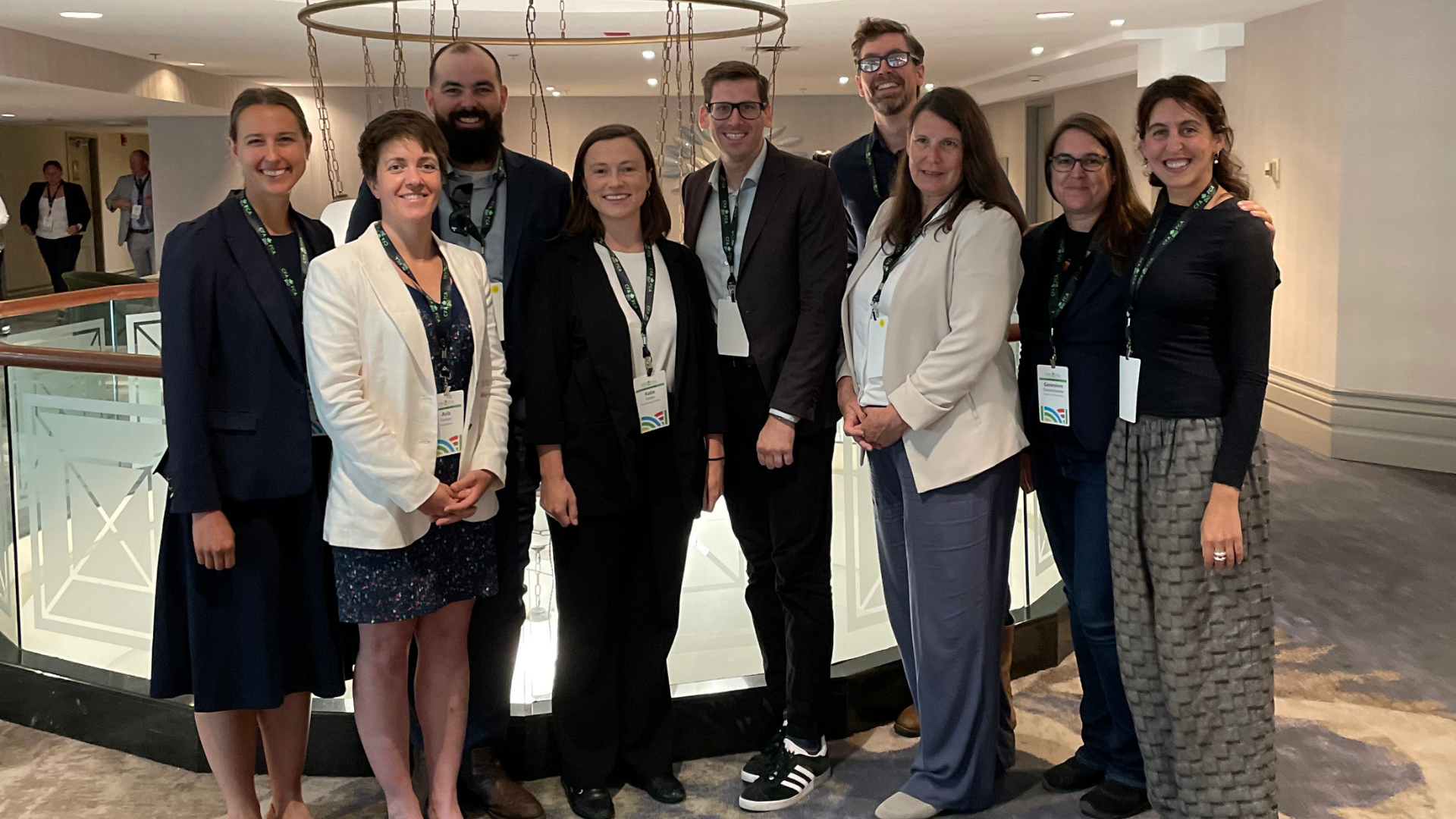
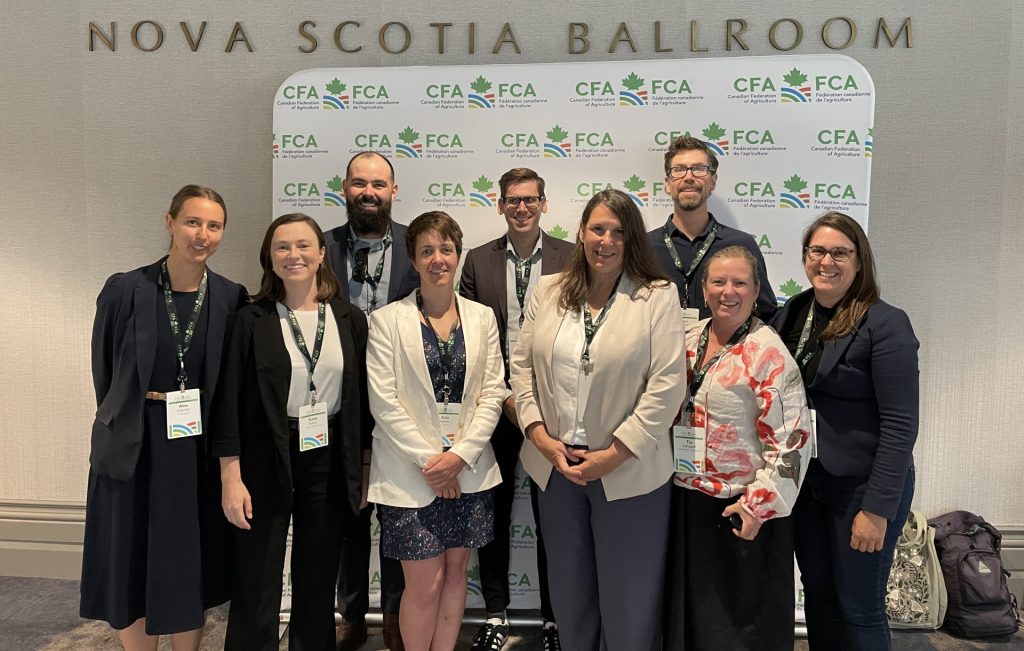
Canadian Organic Growers (COG) attended the Canadian Federation of Agriculture’s Summer Meeting and Policy Summit in Halifax this July. Held alongside the annual meeting of Canada’s federal, provincial, and territorial (FPT) agriculture ministers, the meetings culminated in the release of the Halifax Statement, outlining priorities for Canada’s Next Policy framework (NPF) for 2028-2033.
The NPF will guide billions of dollars in agricultural investments and programs, including research, business risk management, and on-farm support programs. A new round of consultations are now underway on the details of the framework and will continue into 2027.
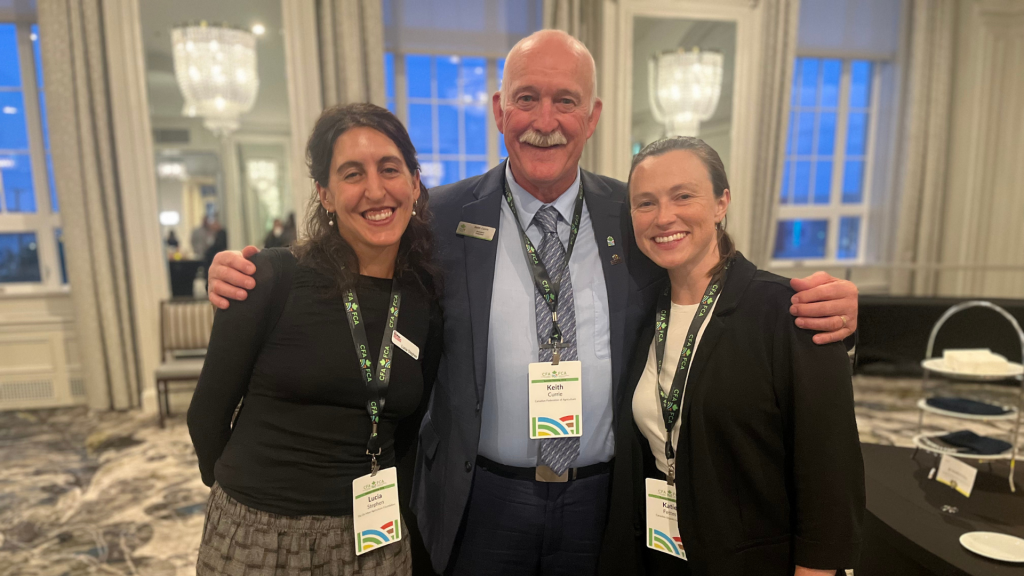
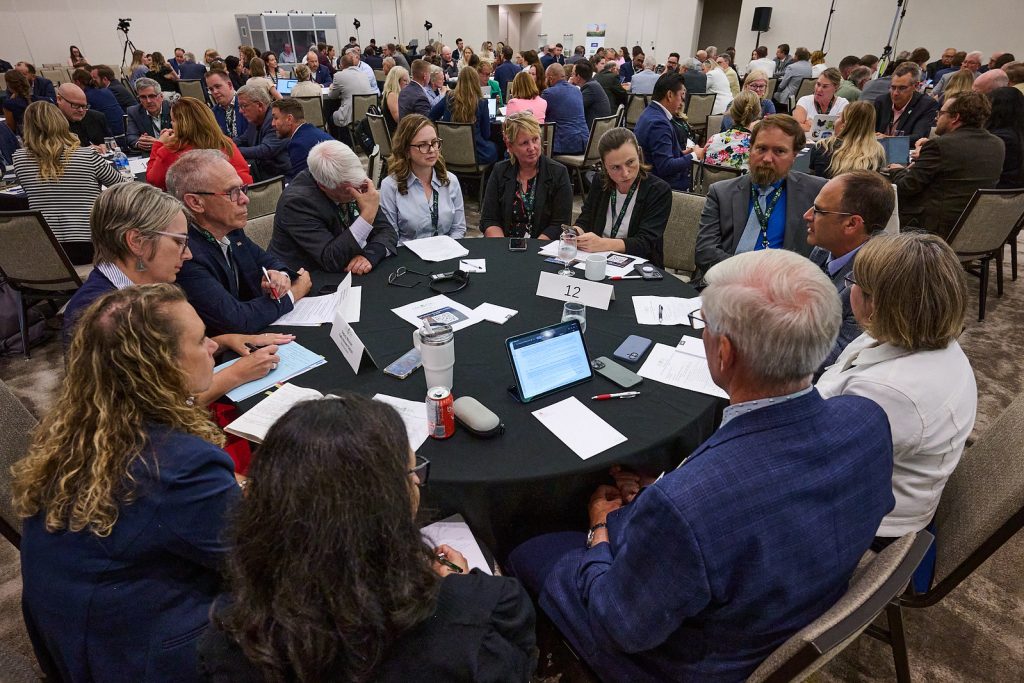
COG’s Executive Director, Karen Murchison, and Katie Fettes, Director of Policy and Research, attended the meetings to engage with government and sector leaders on the organic sector’s priorities for the framework. This included participating in an interactive Ministerial Roundtable with provincial ministers.
The Halifax Statement confirms that resilience will be one of four priorities in the NPF. While COG and the Canadian Organic Alliance (COA) are advocating for resilience to serve as the overarching objective of the entire framework, given the urgent and deepening structural pressures facing Canadian agriculture, we welcome its inclusion as a core priority. Read our response to the Halifax Statement here.
Government and sector messaging continues to emphasize competitiveness, innovation, productivity and technology-driven growth. COG welcomes this focus while encouraging a broader understanding of innovation in agriculture. Organic, regenerative and agroecological approaches are innovative, productive, and technology-forward, drawing on advances in biological systems, ecology, agronomy, precision management, and farmer knowledge to build resilient farms and food systems. Canada’s competitiveness and innovation agenda must embrace these approaches, recognizing that they are essential to building long-term resilience while strengthening the sector’s ability to meet the NPF’s objectives.
Throughout the meetings, COG engaged with federal and provincial officials on key priorities, including support for organic extension, research, and transition, as well as improving access to organic data to support sector growth. The Halifax meetings also provided valuable opportunities to strengthen relationships and build new ones with agricultural leaders from across the country.
While the Halifax Statement sets the overall direction, governments are now developing the specific programs that will determine how those priorities are delivered and measured. COG and the COA recommend the inclusion of an organic growth strategy as a cross-cutting pathway to achieving all four priorities of the NPF.
We want to hear from you. As governments design the future of agricultural policy, it is essential that they hear from farmers. We will be hosting a community briefing later this fall, and in the meantime we encourage you to share your ideas and priorities for the NPF – to share your thoughts, please contact Katie Fettes at katie.fettes@cog.ca.
Pictured in featured photo, top: Alex Pulwicki (Young Agrarians), Ayla Fenton (Young Agrarians), Stuart Oke (Ecological Farmers Association of Ontario), Katie Fettes (Canadian Organic Growers), Josh Matthewman (Temple Scott Associates), Paul Wartman (National Farmers Union), Karen Murchison (Canadian Organic Growers), Gen Grossenbacher (Farmers for Climate Solutions), Lucia Stephen (Do More Agriculture Foundation)