
On grocery store shelves across the country, biotechnology companies are testing consumer acceptance of new genetically engineered (also known as genetically modified or GM) vegetables, fruits, and even garden seeds. Our friends at the Canadian Biotechnology Action Network (CBAN) have helped us gather up some reasons why you might not want GM products in your grocery cart or in your garden.
1. Genetically engineered foods and seeds put Canadian food and seed sovereignty at risk.
Corporations that own the patented gene sequences in GM produce and seeds are increasingly positioned to control seed production and seed access. By creating seed that is patented, corporations can create a monopoly on seed access that would significantly limit or eliminate the tradition of seed saving.
You might be thinking to yourself, but how? Through cross-pollination by wind, insects, or small animals, patented genes could end up in the crops of Canadian farmers (and gardeners) without their knowledge or consent. Big biotechnology companies have already taken Canadian farmers to court for growing crops that have been contaminated with patented genes.
Seeds are the foundation of our food supply. COG, and many farmers across the country, fundamentally disagree with the notion that any one entity should have that much control over our food system. Food and seed sovereignty – which includes the right to grow and produce your own food and seeds – should be available to everyone. Food and seeds should never be patented.
2. Genetically engineered food and seeds put local, organic farmers at risk.
We hear from consumers that one reason they choose to buy local and organic is to support farmers in their own community. And in turn, many farmers choose to become certified organic because it’s important to their local customers.
The threat of genetically modified organisms (GMOs) potentially contaminating their crops doesn’t sit right with many organic farmers, for good reason – the Canadian organic standards prohibit GMOs. If the genes from genetically engineered crops end up in a certified organic farmers’ fields, there is concern that this could jeopardize their organic certification and it could harm consumer confidence in the ‘Canada Organic’ label they know and trust.
Selling genetically engineered seeds to home gardeners is reckless and could jeopardize our ability to provide customers with organic and other non-GE choices. If widely planted by gardeners across the country, these GE seeds pose an unnecessary contamination risk that could threaten heritage seeds and our tradition of seed saving. – Mel Sylvestre from Grounded Acres Organic Farm
The presence of genetically engineered crops in Canada puts extra pressure on organic farmers – they’re forced to take costly measures to prevent cross-pollination of GM crops with their own, and in some cases they have to make the decision to stop growing certain crops altogether.
As a seed grower, I worry about the possible future where crops have become cross-pollinated on a scale that the next generation of growers decides that farming is too risky because of the possibility of patent infringement. Canada is already losing local and small scale farms, farmers, and food security – thinking about what greater acceptance of GMOs could mean for the food system can feel bleak. I’m hopeful consumers and growers can push back against genetically engineered produce and seeds together. – Markus Karahka from Meandering Seeds
3. We don’t need genetically engineered foods or seeds.
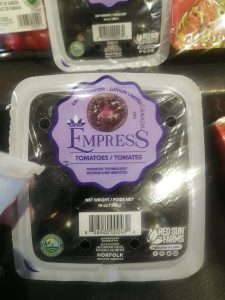
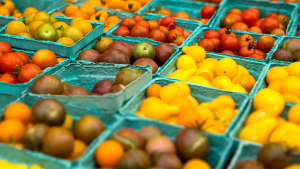
Earlier we mentioned how a GM purple tomato has appeared on shelves in some major Canadian grocery stores. We don’t need genetic engineering to produce purple tomatoes. There are many, many non-GMO purple tomato varieties that already exist and are grown by farmers across the country.
The GM “Empress” tomatoes are not labelled as genetically engineered. They carry the small USDA-required “bioengineered” logo, which is not familiar to Canadians and has the potential to be particularly unclear and misleading for French Canadians – in French the term “bio” is often used to refer to “biologique” which is French for “organic”.
Biotechnology companies argue that Canadian customers want more GM products, but the lack of clear labelling tells us a different story. If a GM product doesn’t provide anything new, and it’s not being marketed as genetically engineered in a transparent way so consumers can choose whether they want (or do not want) to buy GMOs, then is it possible the only point of selling GM produce is for corporations to make money?
4. The sale of genetically engineered foods and seeds puts corporate profit above human and climate health.
Although corporations like to claim that GMOs are safe, there is no scientific consensus on GMO safety and because every GM crop or food is different, no generalized safety conclusions can safely be made.
There has been very little independent research into the safety of consuming GM food and its impact on human health. The studies that do exist raise concerns about potentials for allergic responses and possible toxicity when genetic engineering is introduced into human diets.
GM plants are sometimes called “living pollution” because of their ability to contaminate related native plant populations through cross-pollination. Unintended or overlooked consequences of the genes introduced in GM crops can also negatively impact organisms, soil and water.
The production of GM crops in Canada has also greatly increased the use of harmful herbicides in farming, and exposure to pesticides is linked to human health risks as well as risks for our natural ecosystems and biodiversity.
How can you take action to protect Canadian food and seed sovereignty against genetically engineered produce and seeds?
There are a number of GM fruits and vegetables that could soon be released into our food system and seed supply. Here are some things you can do:
- Remember that genetic modification is prohibited under the Canadian organic standards, and prioritize buying certified organic. How you choose to spend your consumer dollars sends a powerful message.
- Shift your shopping habits – buy from local farmers, farmers markets and independent grocers where you can ask questions about what you’re purchasing, including whether what you are buying is genetically engineered. You can learn more about shopping organically on the Organically Canadian Resource Hub.
- Tell companies like Loblaws who are carrying GMO products that you want a 100% non-GMO produce section so that you know what you are buying.
- Let policy-makers know that you believe there should be government risk assessment, mandatory registration and public transparency for genetically engineered products.
- Follow CBAN to stay up to date on what GM products are being marketed to Canadian consumers.