
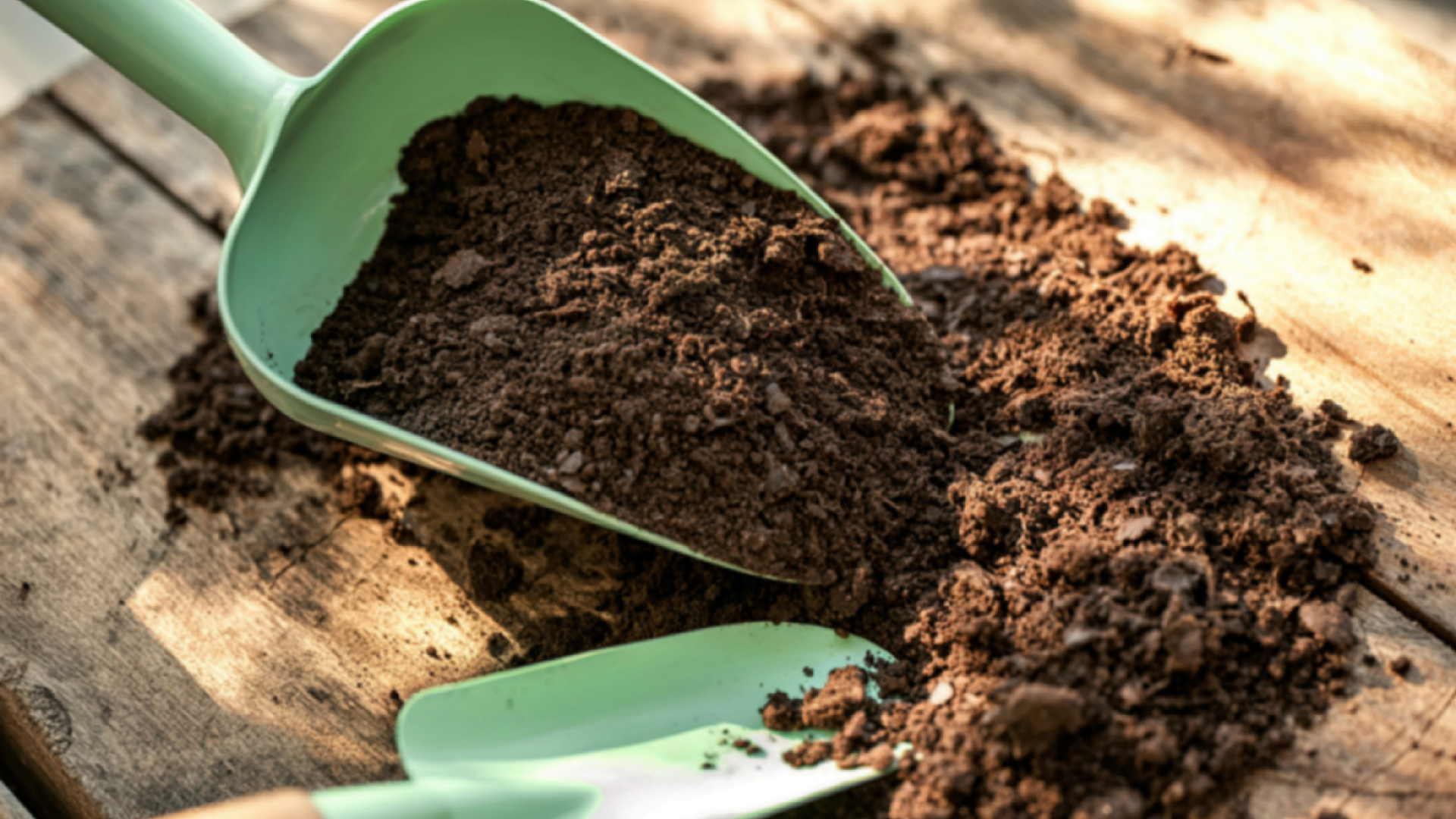
Did you know that the health of the soil in your family’s garden can impact how well your garden grows? Healthy soil is important for the success of an organic garden. It provides nutrients to plants, helps control plant diseases, and helps plants access much-needed water.
Here are three simple tests that you can do as a family to find out how healthy the soil is in your garden!
Test #1: The Soil Colour Test
What You Will Need: Shovel, Spray Bottle
Bonus Supplies: Grab some dark and milk chocolate to help kids distinguish the difference between “dark blackish brown” and “medium brown”, and to add a little extra fun!
- Go into the garden and use your shovel to dig a hole.
- Take a handful of soil and look at it. If the soil is dry, wet it with a spray bottle.
- If the soil is very light in colour, dig deeper and take another sample.
- Use the chart below to find out what the colour of your soil might mean!
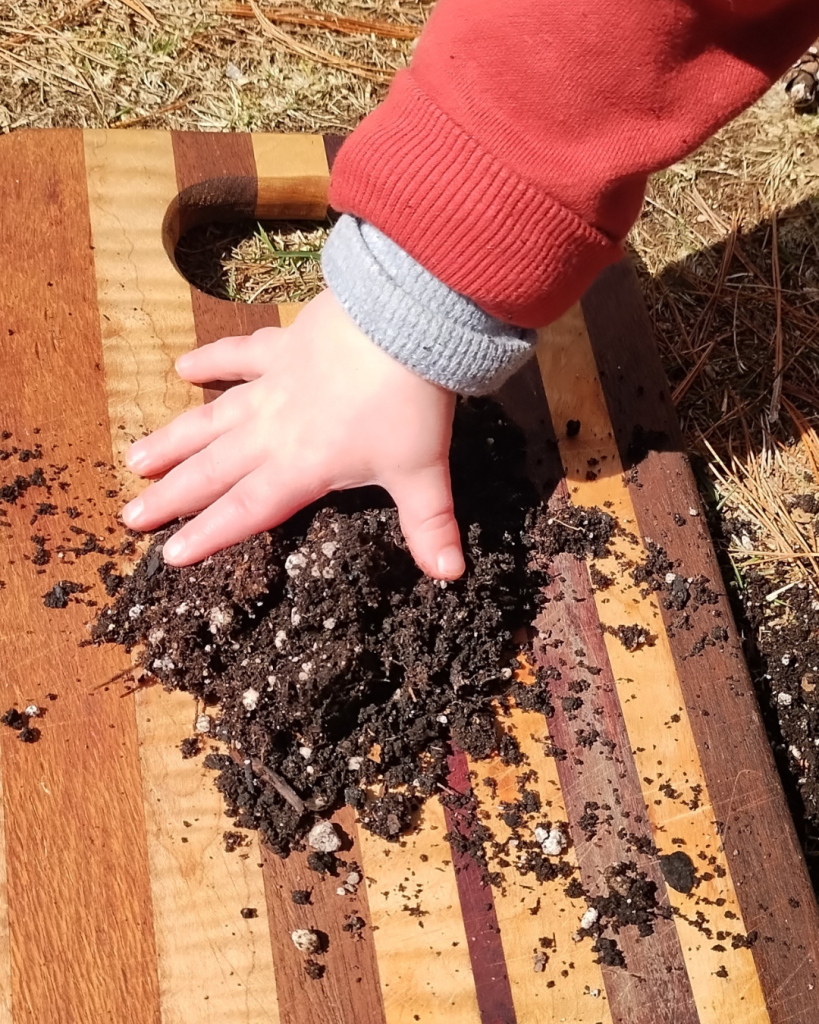

GOOD
Is your soil a dark blackish brown? This is good – there is a lot of organic matter in your soil!

JUST OKAY
Is your soil a medium brown? This is just okay!

NEEDS WORK
Is your soil light in colour? It might need more organic matter.
Is your soil grey or grey with brown spots? Your soil might be waterlogged.
Does your soil have red spots? This might be a sign of poor drainage.
Keep reading to find out what to do!
Test #2: The Soil Smell Test
What You Will Need: Shovel
- Go into the garden and use your shovel to dig a hole.
- Take a handful of soil and smell it. Try smelling it up close and then from six inches away.
- Use the chart below to find out what the smell of your soil might mean!
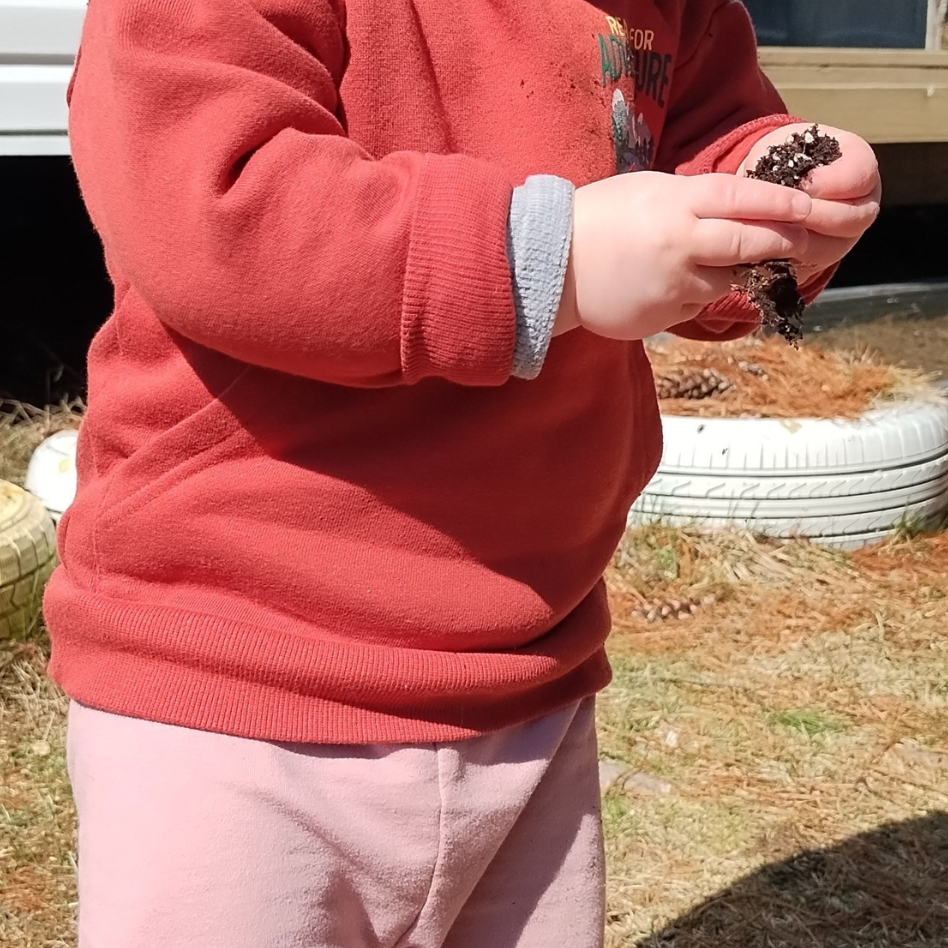
GOOD
Does it have a smell that is pleasant, earthy, or sweet? That is a sign of a healthy soil ecosystem!
Does it smell sweet from six inches away? That’s a good sign that you have healthy soil!
JUST OKAY
Does it have no strong smell at all?
We can’t learn much from this smell, it probably means your soils are just okay.
NEEDS WORK
Does it have a smell that is unpleasant, rotten, or sour? Does it also look very wet? Your soil might be waterlogged.
Does it have a smell that is unpleasant, rotten, or sour, but look fairly dry?
Your soil might be too compacted.
Does it smell like minerals? Your soil might need more organic matter.
Keep reading to find out what to do!
Test #3: The Soil Stability Test
What You Will Need: Shovel, Water, Timer, Small Metal Strainer, Glass/Mason Jar
Note: Your strainer must fit the mouth of your glass or mason jar so the sample inside the strainer can be submerged in water!
- Gather your supplies.
- Go into the garden and use your shovel to dig up a sample of soil about the size of a golf ball. The soil sample should not be very moist – if it is, you can air dry it overnight!
- Fill your mason jar with water.
- Put the soil sample inside your small metal strainer.
- Slowly lower the soil/strainer into the mouth of the mason jar so that the soil sits in the water.
- Set a timer for 5 minutes.
- Watch during the 5 minutes – what do you see? What happens to the water? What happens to the soil?
- Use the chart below to find out what your observations might mean!
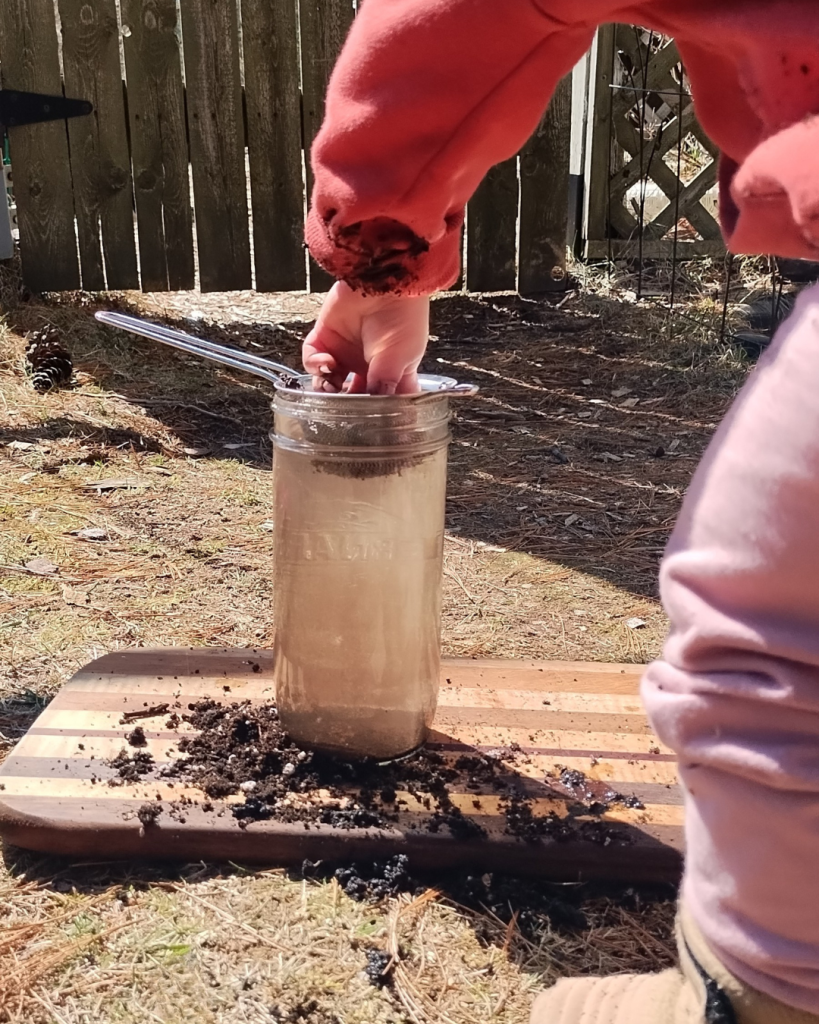
GOOD
Does your water stay clear? Does about 80% or more of your soil stay in the strainer?
That means your soil has good aggregate stability. In other words, there is space in your soil for roots to grow, important microorganisms to live, and water to filter through!
JUST OKAY
Does your water turn a bit cloudy, but about 50% of the soil stays in the strainer?
This result is just okay!
NEEDS WORK
Does your water turn cloudy quickly? Is most of the soil gone within five minutes?
This means your soil has poor aggregate stability. In other words, there may not be enough space for roots, microorganisms, or water under the soil in your garden. Your soil may struggle with heavy rain events.
Keep reading to find out what to do!
What To Do If Your Soil “Needs Work”
If you found out your soil “Needs Work”, here are some suggestions to help improve the health of your soil!
Waterlogged soil:
- Stop watering and try digging temporary trenches to help drain water away.
- Try adding compost. Compost can feed the microorganisms in the soil, which will help improve the soil’s structure and allow water to drain.
Compacted soil:
- Try gently turning the soil.
- Try adding compost. Compost can feed the microorganisms in the soil – they will naturally form tunnels and pathways to allow more air into the soil.
- Avoid walking on the areas where you will plant.
- Try growing plants with deep taproots – like parsnips, daikon radishes, or fava beans – that can go deeper into the soil and loosen it.
Soil that has poor drainage:
- Try adding compost. Compost can feed the microorganisms in the soil – they will naturally form tunnels and pathways to allow water to move more freely through the soil.
- Avoid walking on the areas where you will plant.
- Try growing plants with deep taproots – like parsnips, daikon radishes, or fava beans – that can go deeper into the soil and loosen it. Or try growing plants that like moist conditions!
Soil that needs more organic matter:
- Try adding compost or manure.
- Diversify your crops to attract more diverse microorganisms to your soil. In other words, try to plant a wider variety of plants.
Soil that has poor aggregate stability:
- Try adding compost or manure.
- Avoid disturbing or walking on the areas where you will plant.
- Keep the soil covered with mulch or cover crops (like field peas or mustards).
- Keep living plants/roots in the soil for as long as possible.
Now that you know more about the soil in your own garden, you can check out some of the other resources on our Organically Canadian Resource Hub to find more resources including tips on growing organic at home, recipes for eating the healthy food you grow in your garden, and more!
These soil health measurements have been adapted from the Observational Metrics designed to support Canadian farmers and shared on COG’s Regenerative Organic Hub’s Benchmarking Library.