
From coast to coast to coast, we see women making a major impact on our Canadian food and farming systems. They overcome fierce challenges, feed their communities, and inspire us everyday.
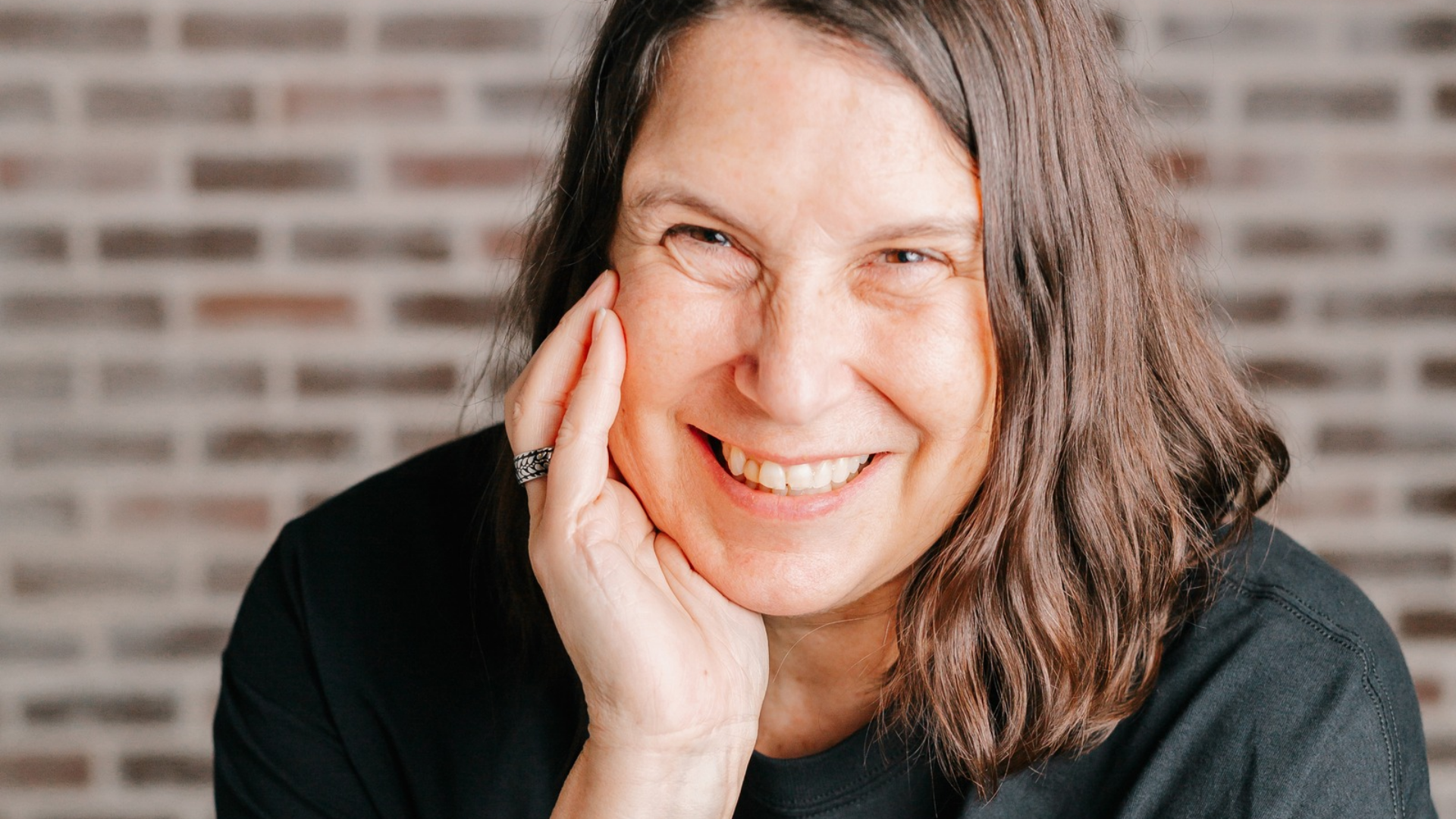
International Year of the Woman Farmer (IYWF) has been the perfect opportunity for us to share some of their stories. As the year draws to a close we wanted to feature an in-depth conversation with Karen Murchison, COG’s Executive Director, as she reflects on what it means to her to be a woman in the ag sector.
Karen has a long history of working with and alongside farmers in Atlantic Canada. She came to Canadian Organic Growers in July 2023 following seven years with the PEI Certified Organic Producers Cooperative where she worked directly with organic and ecological farmers across the province. Her focus has always been on developing strong collaborative networks and strategic partnerships which has often led to successful projects and outcomes. Karen is a professional agrologist and practicing agronomist and has held numerous volunteer positions, most often with food-related community organizations.
What does it mean to you to be a woman in leadership in the ag sector?
“I’ll start by saying that when I started in this world – in agriculture – it was completely male-dominated. So when I landed on Prince Edward Island and I worked on a farm, people would stop their cars and take pictures of me with my ponytail in the tractor… it was a true novelty to see a young woman in a big tractor at that time.
That would have been 30-35 years ago. In my lifetime I’ve seen a huge transition as more young women study agriculture and see opportunities for themselves. It still is largely a male-dominated sector but organics is quite unique in that we do see a lot more women taking leadership roles especially at the farm level. We see a lot of women as either principal owners or managing the farm in a way that’s different than it used to be.
I see so many young women in agriculture around me now. It is really important to me in a leadership role to set an example and to connect with young women in agriculture. I find a lot of joy in connecting with young women on the farm… talking to young women and supporting them and lifting them up.”
What excites you about the accomplishments of women in agriculture?
“When I entered the sector myself, I saw women play more indirect or supportive farm roles – they kept the books, they didn’t get very dirty, they made the meals during harvest and planting, and they weren’t really in the fields very much. And now I look around and I see women on tractors, managing the field operations, overseeing the warehouses, running the businesses in ways that are much different and distinct from what I saw earlier on. Both approaches are valuable and offer important contributions to the success of farms but it is nice to see more of a mix now with women taking on more leadership roles.
It’s really exciting that the agricultural schools are graduating hundreds of women now… and you’re seeing women finding unique ways to also enter the sector. I’m seeing more and more that there are supports around them so that they can take on leadership roles on the farm, with agricultural organizations and in agribusiness.
To see women taking an increasingly important and influential role in the sector is really exciting for me. I think that women can bring a different type of energy – it’s collaborative, supportive, and it’s less competitive. If I look into the future, I think it can only just get more exciting.”
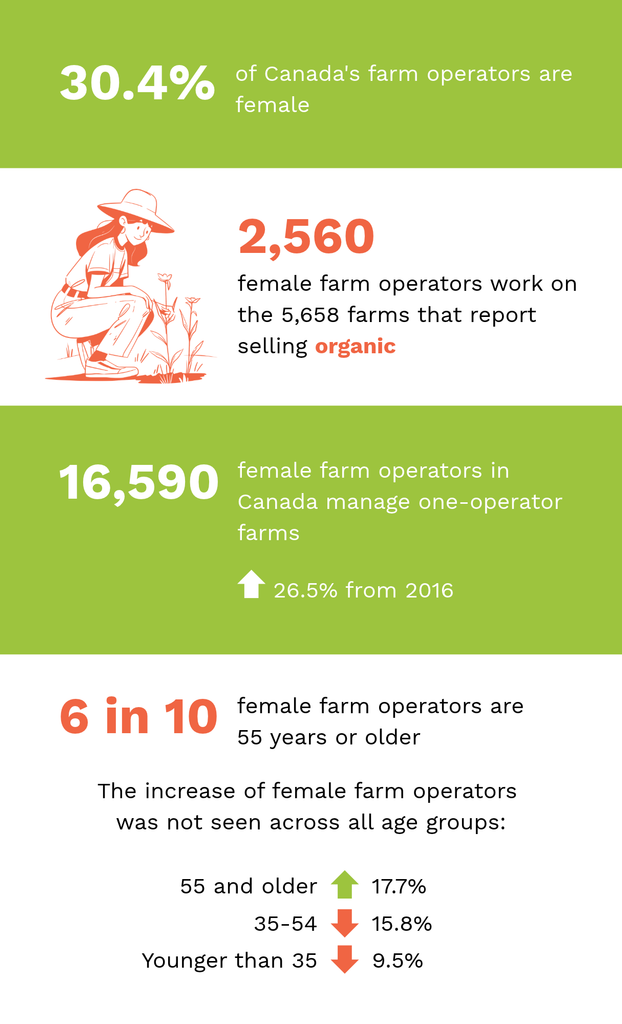
Based on the most recently published Census of Agriculture (2021), the number of Canadian female farm operators is increasing (while the number of male operators is decreasing). The number of female farm operators working specifically on organic farms increased by 30.4% between 2016 and 2021. High-revenue and one-operator farms account for much of the overall increase in female farm operators.
What’s still left to do to make the ag world more welcoming to women who want to make an impact as part of our food and farming system?
”There are still barriers around family and child care that often impact women in agriculture. There are also societal and other pressures for women to carry the load in the household or with the family that can limit or challenge their contributions on the farm. This is true for many working women but extra challenging for farmers because there is no standard 9 am – 5 pm schedule especially when you live on your farm – someone or something always needs your attention. I think that there needs to be an increase in wraparound supports for farm women and farm families in general.
For example, childcare supports aren’t necessarily built for women or families in agriculture, because during planting and harvest especially, the days can start early and they end late. It’s really hard to balance. It’s the kind of career that’s untraditional in terms of the demands on time and energy, and it’s hard physical work. The one thing about organic farming is that, especially at a smaller scale level, kids can be part and actively participate in the farm to a certain extent, but still that’s just another way of overburdening women and parents. There are plenty of examples of women and families managing their work-life balance well but for many it is still a challenge.
I can remember back when I started a good friend of mine was farming with her husband – they had a hog farm and when they were working in the barns they would clean out an empty pig pen for the kids to play in, because there was no child care available to them. There was no daycare that opened at 6 am when they had to be out feeding pigs and there was no one there at 7 pm when they were loading pigs for slaughter. So, women have had to just sort of make do. And I think it’s time that we stop thinking about just getting more women in agriculture and start creating systemic change that will allow them to be comfortable in agriculture as well.”
What does the future of farming look like to you?
“I think we need to see a lot more diversity. I think that there needs to be space for everyone to participate in the production of food and also producing food that is culturally appropriate.
My wish for the future looks like a food system where everybody has equitable access to good food – really good food and organic food. I think that sounds like a beautiful future. Where people know their farmers.
Having those connections, feeding our communities, giving ownership of the food system back to the people… re-localizing our food system. That’s true food security and that’s true food sovereignty.”