
From February 10th-13th, 2026, COG’s Director of Policy and Research, Katie Fettes, attended BIOFACH, the world’s largest organic trade fair and congress, in Nuremberg, Germany. Now in its 38th year, BIOFACH brings together more than 30,000 participants from across the global organic sector.
It was important for Canadian Organic Growers (COG) to be present at BIOFACH to connect with partners through IFOAM Organics International, our global organic umbrella organization; deepen discussions with networks including INOFO (the Intercontinental Network of Organic Farmer Organizations); and contribute to governance conversations shaping the future of the organic movement.
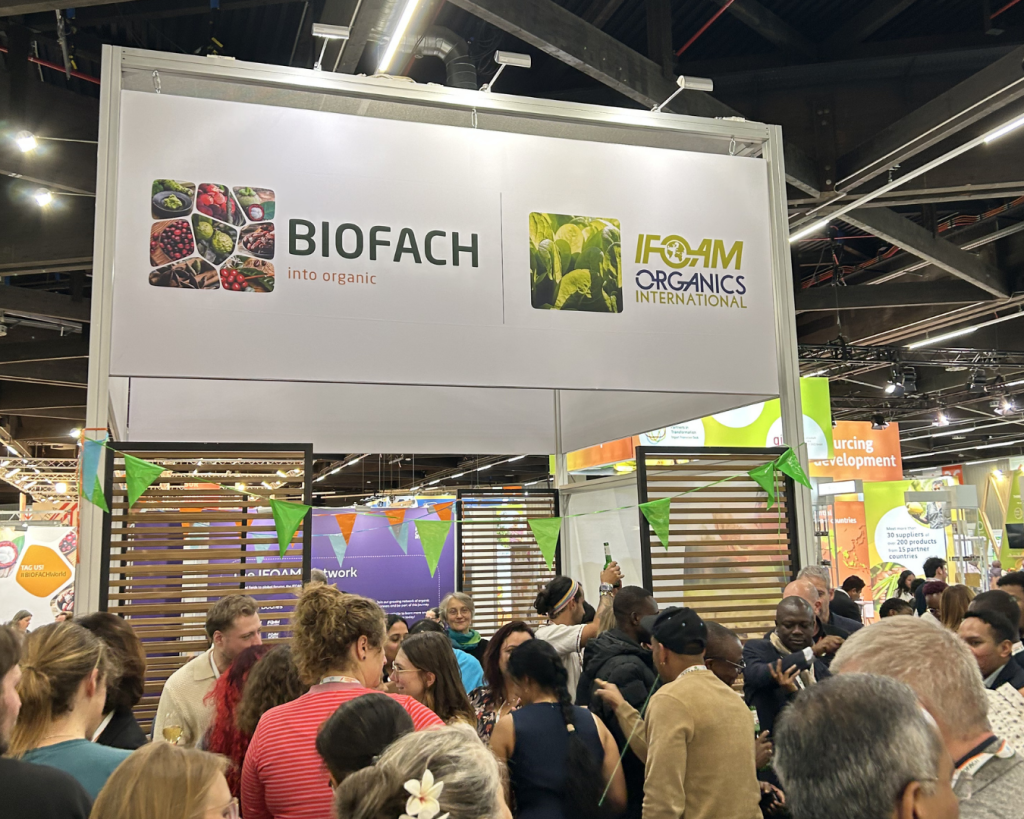
The Congress theme was “Growing Tomorrow: Young Voices, Bold Vision.” A strong focus was generational renewal and leadership transition across farms, businesses, organizations, and governments.
Katie spoke in two sessions:
On February 10th, in “Towards an Organic Future: Passing the Torch,” Katie addressed Canada’s generational renewal challenge: 40% of Canadian farmers are expected to retire by the early 2030s, and only 12% report having a succession plan. This reflects global trends in agriculture. She highlighted innovative solutions from Canadian organizations like Young Agrarians, an organization which offers land matching services, apprenticeship programs, and business mentoring with a focus on ecological agriculture.
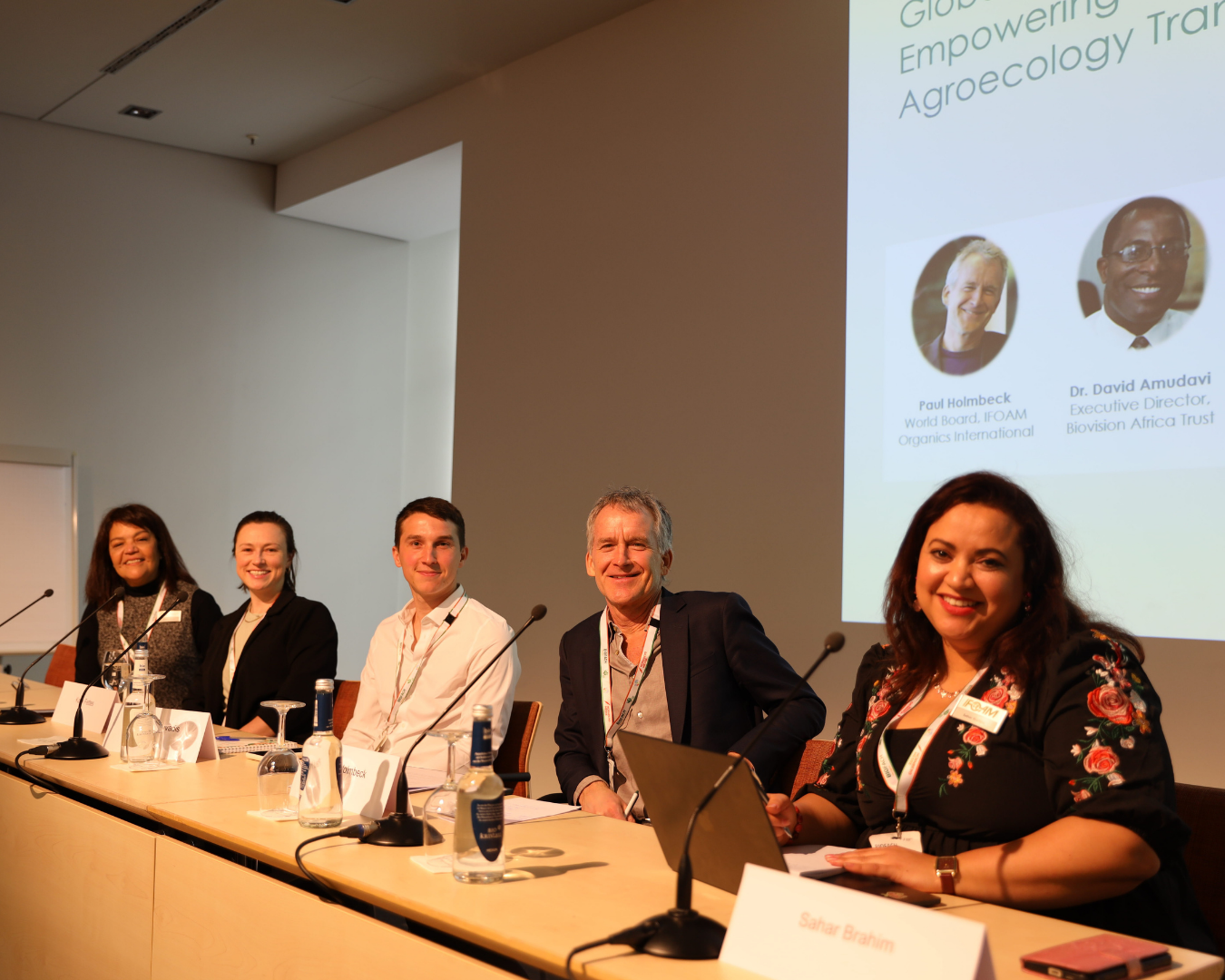
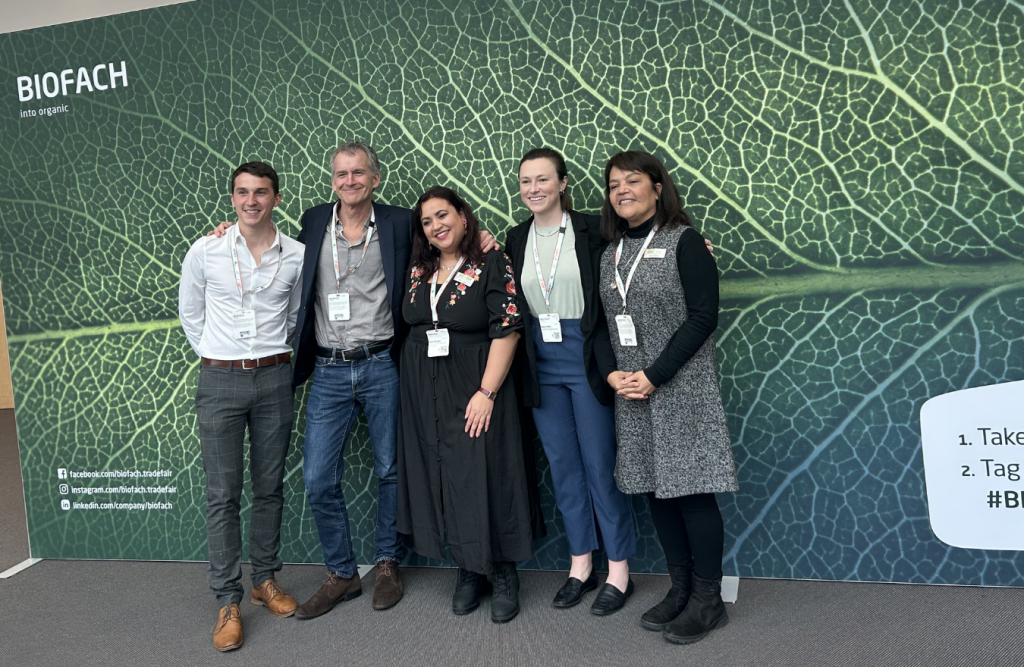
On February 12th, she joined “Shaping the Future: Global and National Policies Empowering the Organic & Agroecological Transition,” alongside speakers from North America, Latin America, Europe, Africa, and Asia. The discussion focused on how policy frameworks can drive organic and agroecological growth with positive impacts on rural economic development; food security and sovereignty; and biodiversity and climate resilience.
Successful organic countries, such as Denmark (with over 12% market share being organic), demonstrate that growth requires coordinated public policy, market development, and sector capacity. Canada has some elements of all three but lacks a coordinated and consistent approach to seizing our own organic opportunity. The session slides from February 12th are available here.
Many thanks to Sahar Brahim for organizing the “Shaping the Future” session and Julia Lernoud for organizing the “Towards an Organic Future” session 🙌
At the opening ceremony, Elisabeth Werner, the European Commission’s Director General of Agriculture and Rural Development, confirmed that organic agriculture will continue to be a pillar of the EU’s next Common Agricultural Policy (CAP), currently under renegotiation, because it contributes to all key priority areas of the CAP – competitiveness, sustainability, and resilience.
Rajesh Agrawal, India’s Secretary of Commerce, also spoke, highlighting strong organic momentum in India, which was celebrated as the ‘Country of the Year’ at BIOFACH. Organic development is context-specific, and in India, it is a solution for farmer livelihoods and independence.
Resilience was a key theme throughout the week. There is growing attention to food production systems that are less dependent on global supply chains and more rooted in local resources. Organic farming’s reduced reliance on synthetic inputs and focus on building soil health and sustaining biodiversity positions it as a resilient production model in the face of geopolitical and supply chain disruptions.
Other key themes included impact assessment and outcomes measurement, particularly in the context of increasing focus on regenerative agriculture. There is increasing pressure to quantify economic, ecological, and social outcomes, and to align supply chains with farm-level transition efforts. COG believes that impact assessment should be designed first and foremost to support on-farm decision-making and benchmarking, and prioritize strong farmer data ownership and governance, while supporting consumer knowledge and transparency.
The event also marked the release of The World of Organic Agriculture 2026 (presenting 2024 data), the annual report presenting global organic statistics. Global organic markets continued to grow, reaching €145 billion globally, while farmland held steady at 95 million hectares. Organic regulations exist or are in development in over 80 countries around the world.
Beyond the Congress, the trade fair provided an opportunity to visit the Canada Pavilion – including, of course, lots of maple syrup – and connect with Canadian partners.


Additional reflections from IFOAM about BIOFACH 2026 are available on the IFOAM blog.
Danke schön!

