

We work to advance policy at the local, regional and national levels
As a registered educational charity and not-for-profit, we engage governments on issues of importance to organic and regenerative producers in Canada. Our government relations work is driven by a commitment to advocating for policies that support the growth and success of organic farming, ensuring that the voices of organic farmers are heard in the policy-making process. We strive to create opportunities for organic farmers to connect directly with their representatives, enabling them to share the positive impact of their farming practices and communicate the policy support they need. We also collaborate with stakeholders on issues faced by consumers and value chain businesses.


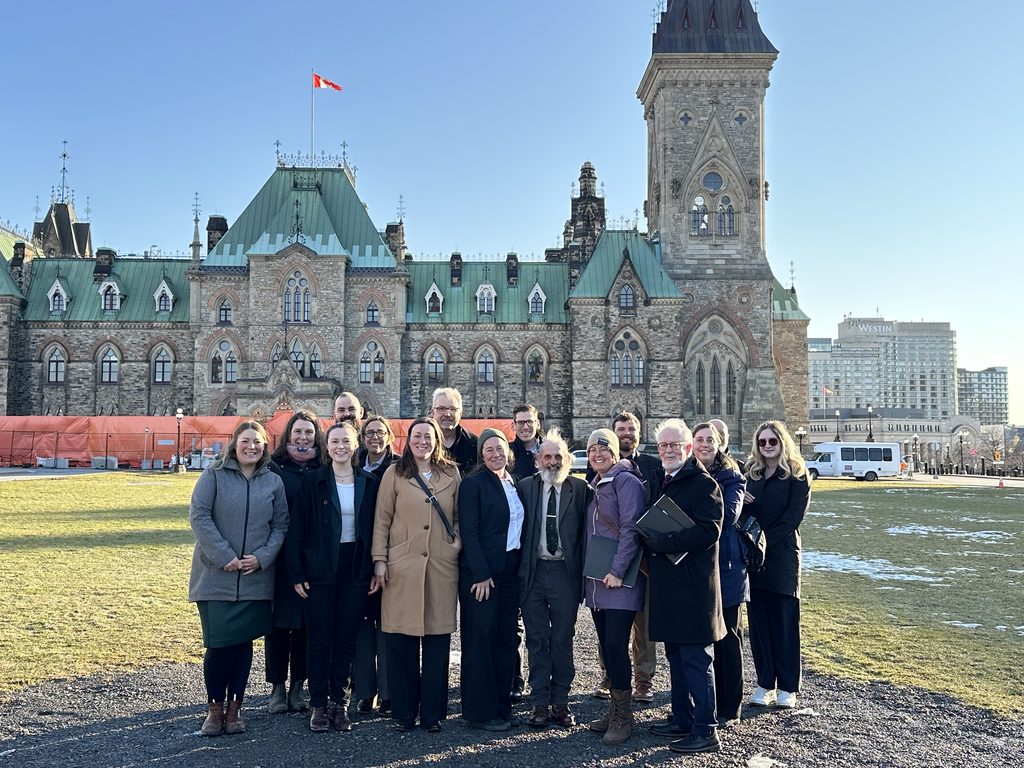
COG Hill Days
On March 9th and 10th, 2026, organic farmers from across Canada gathered in Ottawa with Canadian Organic Growers for two days of meetings with Members of Parliament, Senators, and federal officials – bringing a clear message: Canada has a major opportunity to expand domestic organic production and reduce reliance on imports while supporting increased exports.
Throughout COG’s Hill Days, farmers spoke directly with representatives from their regions, sharing their on-the-ground experience navigating economic and climate uncertainty, and outlining practical pathways to strengthen resilience and farm profitability. Farmers spoke to both the challenges they face today and the opportunities ahead, including growing domestic and global demand for organic products.
Farmers highlighted five priority actions to unlock growth in the agriculture sector:
- Permanent funding for the Canadian Organic Standards (COS): The COS underpin the industry and support organic trade equivalency arrangements with 35 countries. Unlike our trade competitors, Canada does not have a permanent funding mechanism for the mandatory five-year review process required to maintain the standards.
- A coordinated national organic data strategy: While significant data is already collected, it is not consistently published and accessible. Improving data access would support better decision-making by farmers, processors, and investors, and improve sector competitiveness.
- Addressing trade barriers and processing bottlenecks: Farmers highlighted the need for more certified organic processing capacity and improved interprovincial and international trade conditions to strengthen domestic supply chains and Canadian food sovereignty, while meeting growing opportunities in strategic regions including Europe and the Indo-Pacific.
- Reinstating organic and regenerative agriculture research: Participants joined farm groups across the sector in raising concerns about recent cutbacks to public agricultural research, including the Organic and Low-Input Research Program at the Swift Current Research and Development Centre. Reinvesting in this public research capacity is critical to advancing climate resilience, soil health, and innovation across Canadian agriculture.
- Invest in organic agriculture in the Next Policy Framework: A clear and coordinated strategy to reduce transition risk, strengthen proactive risk management, support research and innovation, scale independent extension, and build domestic supply chains and markets represents a major opportunity to enable Canadian farmers to meet growing demand at home and abroad.
Farmers also emphasized the need to establish a funding mechanism that is fair to all involved (producers, processors, markets) to enhance and grow organic production and markets.