

Regenerative organic farmers are always looking for ways to reduce weed pressure in a way that aligns with organic practices (like not using synthetic inputs) and the principles of regenerative agriculture.
In Balcarres, Saskatchewan Rob and Lisa run Schill Family Farm. With a real openness to trying something new, this powerhouse family raises a variety of livestock and grows diverse field crops, with creative solutions and soil health always top of mind. So what is one of the innovative ways Schill Family Farm is tackling weed pressure? With pigs!

Rob and Lisa first introduced pigs to their farm five years ago. This decision came about as they were looking for more opportunities for diversity on their farm and in their income. After introducing the pigs to their farm, they quickly learned that pigs are skillful escape artists with big appetites.
“Put in the infrastructure for your fencing – or whatever you’re going to use to contain them – first! Then worry about getting the pigs. If you don’t, they get out in the yard and they’ll root up your lawn to get to the roots and the bugs in the soil,” says Rob, “They root and they dig. That’s what they do right?”
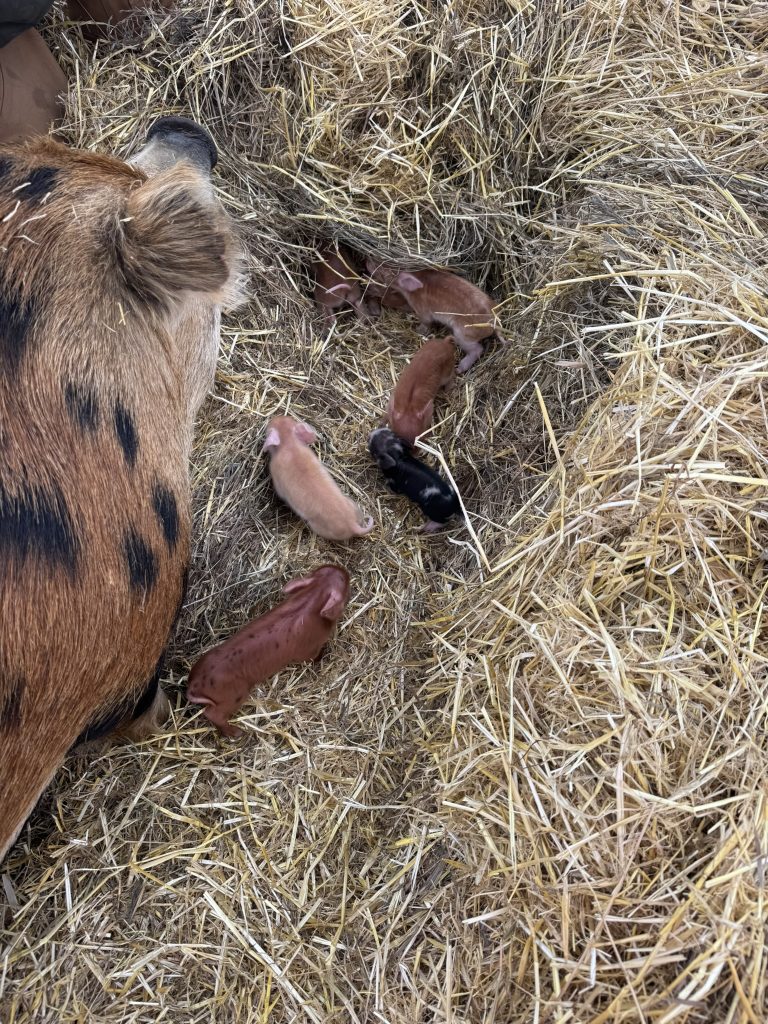
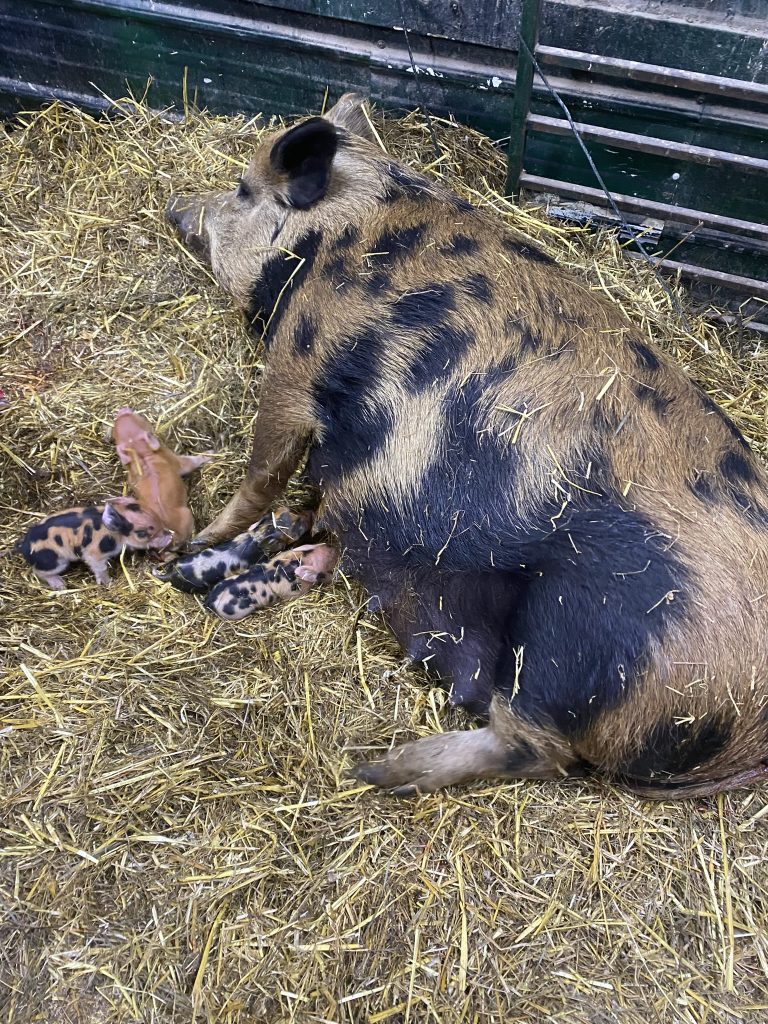
As time went on and their herd of pigs grew, Rob and Lisa came up with an idea to turn that natural rooting and digging into an asset–their mobile pig pen. Built with a shelter, water, and secure panels, the mobile pig pen is able to be hitched to the tractor and moved every 24 hours.


Now the pigs can happily spend their days grazing the farm’s cover crop rows, especially areas being overtaken with quackgrass and thistles, from the comfort of the pig pen that brings them to a new fresh buffet of weeds daily. Their rooting and soil stimulation is beneficial for the fields, as are the nutrients they leave behind with their poop. In addition to the benefits provided to the soil, the mobile pig pen also directly benefits the health and happiness of the pigs. A general principle of organic production is that livestock living conditions must be conducive to the animal’s health and natural behaviours, like rooting.
“Where the thistle patches were, I grazed (the pigs) over that in late fall. I did a side-by-side trial basically. There’s a spot where the pigs went through beside a spot where cultivation was done,” says Rob, “It’ll be interesting to see come spring if they did better (weed) control than what cultivation did.”
Rob and Lisa also plan to do soil testing this year to get a more full picture of what other benefits the pigs are having on the farm and soil fertility–besides saving them time on the cultivator and being very cute!
After reading about the pigs on Schill Family Farm, are you eager to incorporate livestock on your farm?
Integrating livestock into farming systems is a key aspect of regenerative organic agriculture, accelerating the regenerative process by enhancing soil health and overall farm productivity. To hear more perspectives about livestock integration from other Regenerative Organic Oats (ROO) program farmers like Rob and Lisa, you can check out our ROO Learning Series on Livestock Integration on our Regenerative Organic Hub. To learn even more about livestock integration you can also check out our Principle of Livestock Integration resource.
Want to learn more about the ROO program? Visit our Regenerative Organic Oats program page.
Want to follow along with Schill Family Farm’s adventures with their pigs and life on the farm? You can follow them on Tiktok or Instagram